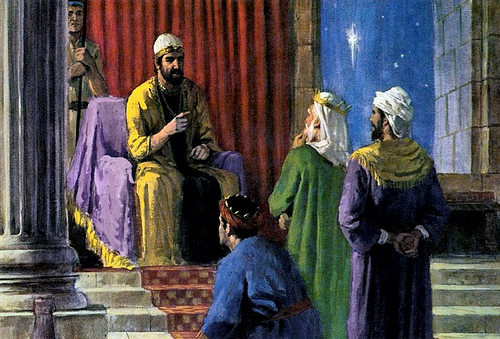
Two short excerpts from the Infancy Narratives (Luke and Matthew):
(17) Now when they had seen Him, they made widely known the saying which was told them concerning this child. (18) And all those who heard it marveled at those things which were told them by the shepherds. (19) But Mary kept all these things and pondered them in her heart. (20) Then the shepherds returned, glorifying and praising God for all the things that they had heard and seen, as it was told them. [Luke 2:17–20 NKJV]
(1) Now after Jesus was born in Bethlehem of Judea in the days of Herod the king, behold, wise men from the East came to Jerusalem, (2) saying, where is He who has been born King of the Jews? For we have seen his star in the East and have come to worship Him. (3) When Herod the king heard {this}, he was troubled, and all Jerusalem with him. [Matthew 2:1–3, 12 NKJV, emphasis added]
According to the Gospel of Luke, once the shepherds had seen the newborn King of the Jews for themselves (a newly born baby lying in a makeshift bed made from an animal food trough), “…they made widely known…” and “…returned, glorifying and praising God…” It seems that the shepherds frankly “couldn’t shut up” about what they had seen. And who can blame them? I would like to think I would have done the same in their position.
In contrast, when the wise men (Greek magoi; Strong’s #3097; Anglicized: “magi”) arrived at Herod’s court, Herod was “troubled” (Greek tarasso; Strong’s #5015; agitated, afraid, terrified) and all Jerusalem with him!
This is a stunning contrast. It seems the shepherds told anyone who would stand still long enough to listen, but even though “all those who heard it marveled,” there doesn’t appear to have been any lasting impact of the shepherd’s broadcast concerning the arrival of the Mashiach Nagid—the Messiah the King! When the wise men arrived in Jerusalem however, even though they had not visited the “young child living in a house” in Bethlehem yet, their presence created quite a stir.
Now, there were extenuating circumstances to be sure. The “wise men” were most likely Parthian nobility from the house of Suren—one of seven noble families that comprised the house of Magistanes (magistrates)—the lower house of the Parthian bicameral government. The upper house was the royal family, the Arsacids.
Herod had every right to be disturbed by their presence, as did the whole city of Jerusalem. This was not just three semi-anonymous guys on camels from some mysterious Eastern cult. The Suren were a well-known, prestigious noble family with significant power and responsibility. The Suren had held the exclusive right to coronate the king of the realm since the inception of the empire. A Suren had coronated every Arsacid king for the last 250 years! Plus, they were the official royal cavalry. Historical records indicate that Surena, the head of the house of Suren and spahbed (commander of the army) that defeated the Roman triumvir Crassus at Carrhae in 53 BCE, traveled with a personal bodyguard of 10,000 cavalry. And it was the Parthian invasion of Judea under the generals Pacorus and Barzapharnes in 40 BCE, that disfigured and deposed the high priest Hyrcanus II, murdered Herod’s brother Phasael, installed a puppet king (Hyrcanus’ nephew) Antigonus on the Jewish throne, and sent Herod running to Petra, Alexandria, and finally Rome for reinforcements (where he would be appointed “King of the Jews” by the Roman Senate—how marvelously ironic). The Suren were kingmakers with enough political and military clout to enforce their will. Furthermore, the diplomats in Herod’s antechamber were openly asking “Where is he who is born king of the Jews?” In other words, where is the legitimate king? Because that’s clearly not you (Herod)!
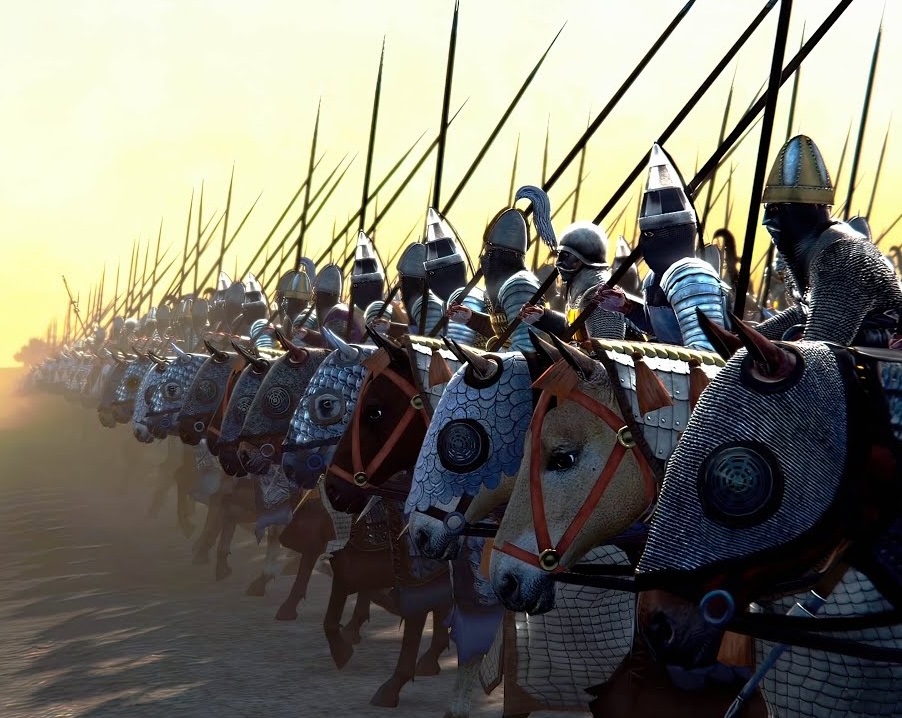
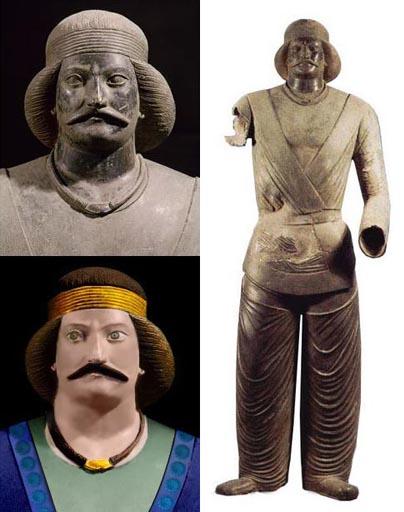
Herod must have inwardly asked, “Are they here to do it again?” It stands to reason, given the biblical and historical evidence available, that there was a substantial army at Herod’s doorstep, plus he was old, unhealthy, and the succession within his dysfunctional family (comprised of multiple unscrupulous wives and sons) was up for grabs.
But the bigger threat to Herod, and the joy and rejoicing of the shepherds (albeit 15 months earlier) was a baby/small child born and living in Bethlehem.
But God hath chosen the foolish things of the world to confound the wise; and God hath chosen the weak things of the world to confound the things which are mighty. [1 Corinthians 1:27 KJV]
To the best of our knowledge, Jesus was born on September 11, 3 BCE (Gregorian) which was Tishri 1, 3759 AM (Anno Mundi) Yom Teruah, the Feast of Trumpets on the Hebrew calendar. Ironically, to the best of our knowledge, the Suren arrived at Herod’s court in late December 2 BCE, possibly even on December 25 (hence the confusion regarding Jesus’ birthdate).
When the wise men visited the young child Jesus in Bethlehem, we are told that they presented him with gifts of gold, frankincense, and myrrh. This often conjures mind pictures of chests filled with coins and aromatic resins. But I believe something much deeper is being implied. What if, instead of merely giving quantities of these items to Jesus, Mary, and Joseph; or, in addition to giving quantities of these items, the magi “gave” (a “gift” of) incense by burning it as offering—an idea not dissimilar to Mary of Bethany’s expensive ointment.
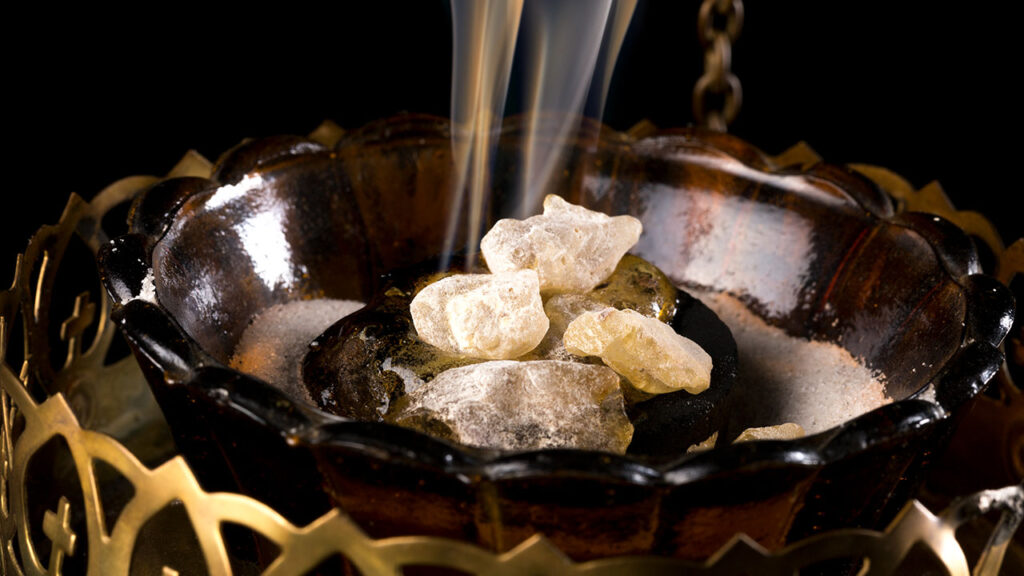
This hearkens back to the story of Zechariah offering (burning) incense on the golden altar in the Holy Place. Frankincense and myrrh were both ingredients in the special recipe for the holy incense that was exclusive to the Temple, and the golden altar was before the veil, behind which was the ark of the covenant, signifying the presence of God.
I believe these episodes are symbolically connected.
But in a stunning prefigure to Matthew 27:51, Mark 15:38, and Luke 23:45, where the veil was rent, there simply was no veil and the magi (who were Gentiles) were in the immediate presence (granted, in the form of a small child) of divinity.
I don’t know about you, but my mind reels at the almost incomprehensible truths contained in Bible stories ripe for those with eyes to see and ears to hear. But even more, our hearts rejoice in God’s eternal purpose and ultimate intention—Immanuel—God with us. And thanks to His accomplished work, not just with us, but in us.
The Hebrew shepherds met the Mashiach Nagid.
The Parthian magi worshipped Immanuel.
Herod, trembled.
In a world full of Herod’s, be a magus!
God bless you. Merry Christmas, and God Save the King!
These are some interesting developments. Most scholars teach that the magi probably showed up 18 months later, but it makes complete sense that they showed up three months later with a standard journey across the desert.
Also, the insights about frankincense and myrrh being part of a holy burnt offering is actually very interesting. Also makes complete sense. And as you have pointed out elsewhere, Mary and Joseph are part of Noble families. I’m sure the gold was a gift to support them, but they were not as poor as people think.
I love how your understanding deepens so much with the years as you continue to research these things.
The Magi arrived about 15 months after Jesus was born. I’ll need to double check the text. Did I somehow suggest three months? Jesus was born September 11, 3 BCE; the Magi arrived late December 2 BCE.
Also the symbolism of a possible incense offering is huge. As I mention in the article, a Hebrew priest in the Holy Place had the veil between him and divinity when he burned incense–the Magi had no veil. The prophetic significance is stunning.