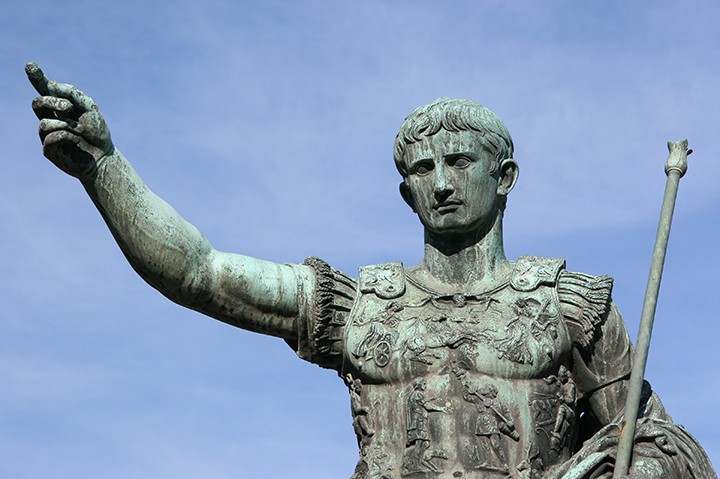
As mentioned ad infinitum, one of my goals is to rewrite the nativity story as it likely would have happened biblically and historically as compared to the traditional nativity story which is Christian mythology. My treatment will include plausible historical and biblical events for which we have no precise records. I am endeavoring, as hopefully most historians do, to fill in the blanks as accurately as possible.
Without going to great length to mention the large number of corrections that need to be recognized, I believe that Jesus of Nazareth was born September 11, 3 BCE. Accordingly, I believe the decree from Caesar Augustus mentioned in Luke 2 most likely arrived in Nazareth in the spring of 3 BCE (motivating Joseph and Mary to relocate to Bethlehem) after an approximately four month journey from Rome, first overland to Brundisium, and then via sea voyage to Seleucia Pieria, and then overland again to Antioch, Caesarea Maritima, Sepphoris, and Nazareth, utilizing the official Roman imperial courier and transportation service called the cursus publicus (“the public way”).
This decree is the subject of much debate. Many skeptics and atheists claim it never happened, but the more I learn about the intricacies of Roman culture and Augustus’ reign in particular, the more the decree makes sense. But here is a very interesting piece of the puzzle. Although scripture tells us Augustus issued the decree, it did not likely initiate with him. It most likely was kickstarted in the Senate and then moved forward by Caesar’s chancery. Caesar would have “reluctantly” (for the sake of political theater) given his consent, and therefore was “issued” by Augustus Caesar.
It is historically plausible that Consul Lucius Passienus Rufus may have been among the inner circle that proposed giving Augustus the title Pater Patriae (Father of the Fatherland). Such an honor could have inspired an empire wide oath of allegiance to Caesar. This would not have been understood as “permission” to give Caesar the title, but as acknowledgement of what was going to happen regardless. It would not have involved every person, especially in the provinces and client kingdoms. The most likely reason Joseph was dragged into it would have been if he owned property in Bethlehem, which I believe he did.
All of that to say that I believe it is historically plausible that Rufus (or someone very similar) gave a speech to the Senate, most likely in late 4 BCE.
Rufus is an excellent candidate because he was novus homo (literally “new man”)–a term denoting the first individual in his lineage to achieve high Roman office, especially consulship. Additionally, the term denotes climbing the cursus honorum by merit as opposed to inherited, aristocratic lineage.
Cursus honorum (Latin for “course of honors”) was the mandatory, sequential order of public offices held by aspiring politicians in the Roman Republic and early Principate (Empire).
Rufus was apparently an extraordinary orator, thereby suggesting that he could have been the one to make a speech before the Senate. Additionally, as consul, this would have landed squarely within his purview, and also as a way to authentically honor Caesar, which would benefit him (Rufus).
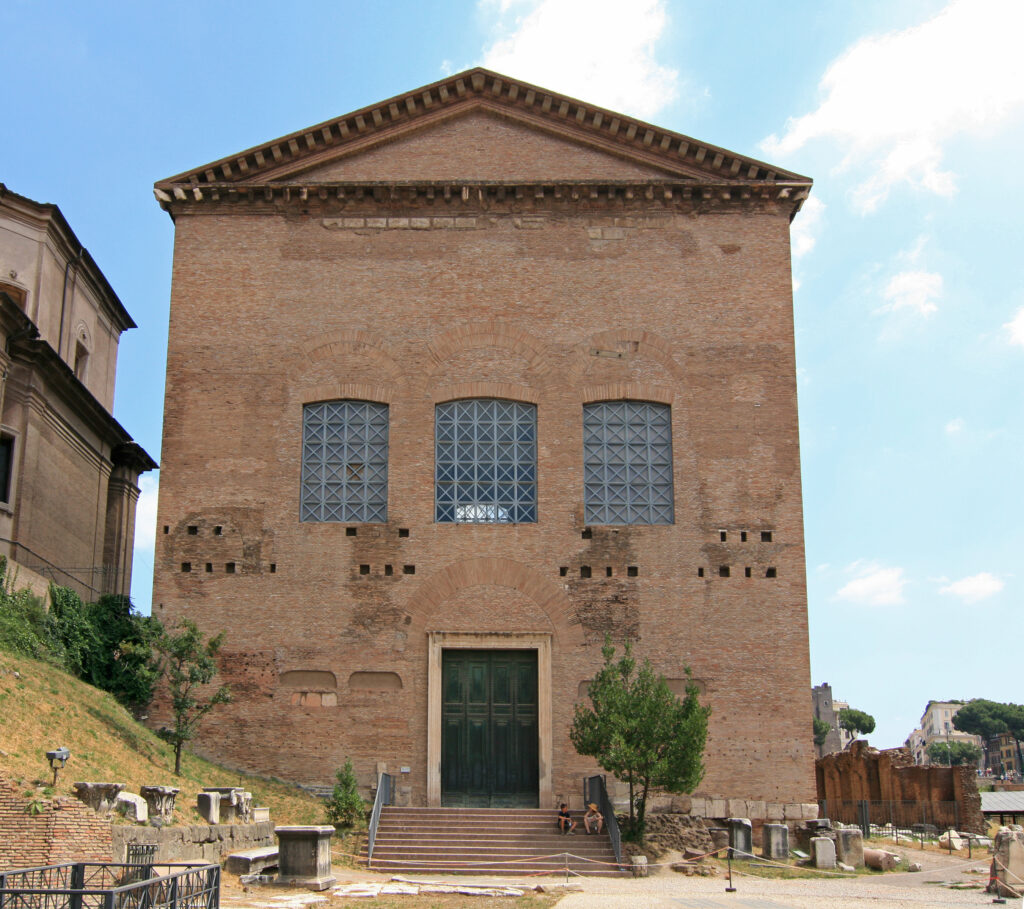
Granted, this is historical fiction. It may have sounded like this:
Long Desired, Long Deserved
A Speech Before the Roman Senate, November 4 BCE
Lucius Passienus Rufus, Consul
Conscript Fathers,
There are moments in the life of the Republic when gratitude, long restrained by modesty, must at last find voice. There are honors which, if offered too soon, appear excessive — and if withheld too long, appear unjust. Today we stand at such a moment. When our ancestors preserved the Republic, they named its saviors Fathers of the Fatherland. They did not bestow that title lightly, nor in flattery, nor in haste. They reserved it for those whose vigilance, courage, and devotion secured the safety of Rome herself.
Marcus Tullius Cicero was called Pater Patriae for suppressing a conspiracy — and rightly so. In a moment of mortal danger, he stood firm and preserved the state from hidden daggers and midnight treachery.
Gaius Julius Caesar, whose name we still speak with awe, received the title briefly for his victories and for restoring order after long years of civil conflict. Whatever judgments history may render, none can deny the magnitude of his achievements.
But Conscript Fathers — if Cicero saved the Republic from conspiracy, and if Caesar restored her through victory, what shall we say of the man who ended civil war not for a season, but for a generation? Who among us has done more for Rome than Caesar Augustus?
He did not merely suppress a plot.
He extinguished civil war.
He did not merely win victories.
He closed the gates of Janus and gave us peace on land and sea.
He did not seize perpetual dictatorship.
He restored magistracies.
He revived the Senate.
He renewed our laws.
When the Republic lay exhausted from discord, he did not claim kingship — though power was within his grasp — but chose instead the title Princeps, first among equals. He governed not as a tyrant, but as guardian. Under his guidance:
Provinces once plundered now flourish.
Armies once instruments of ambition now defend our frontiers.
The treasury stands secure.
Justice is administered without fear.
The name of Rome is honored from the Pillars of Hercules to the Euphrates.
He has restored not only our territory — but our morals.
Through his legislation, marriage has been honored, households strengthened, and the ancient virtues recalled from neglect. He has reminded us that the strength of Rome lies not only in her legions, but in her families.
And now, in his wisdom, he has provided heirs for the state. Gaius and Lucius, raised not in indulgence but in discipline, stand before us as living pledges of continuity. The future is no longer uncertain; it is secured.
Conscript Fathers, this is not innovation we propose today, but recognition.
The title we consider is not new — it is ancient.
It is not monarchical — it is paternal.
It does not make him king.
It names him what he has long been.
For what is a father?
A father protects.
A father disciplines.
A father provides.
A father sacrifices his own ease for the safety of his household.
For more than forty years, Caesar Augustus has done precisely this for Rome.
He has borne the burdens we would not bear.
He has endured suspicion rather than risk disorder.
He has accepted authority only insofar as it preserved peace.
If Cicero deserved the title for saving the Republic in a single hour of crisis,
If Julius Caesar deserved it briefly for restoring order through victory, then Augustus — who has secured peace, restored laws, strengthened families, defended our frontiers, and provided heirs — has done more than either Cicero or Caesar.
Who among us has done more for Rome than Caesar Augustus?
Who has shown greater restraint with greater power?
Who has governed with firmer justice and gentler hand?
The Roman people already regard him as father. The equestrian order already looks to him as guardian. The provinces flourish under his protection. Our soldiers swear loyalty not from fear, but from trust.
Let us therefore declare openly what has long been true in the hearts of men.
Let us grant him the title long desired and long deserved.
Let us call him what he has been in fact — if not yet in name:
Pater Patriae
And may he, as he has done these many years, continue to watch over Rome as a father watches over his children — not for his glory, but for the safety and perpetuity of the Republic.
Conscript Fathers, I move that Caesar Augustus be named Father of the Fatherland.