The Biblical Case for Public but Untelevised Capital Punishment

You shall surely bury him that day. [Deuteronomy 21:23b NKJV]
Introduction
Over the past several weeks there has been significant debate on social media over the previously declared intention of the Department of Defense to live stream the execution by firing squad of convicted murderer Nidal Malik Hasan.
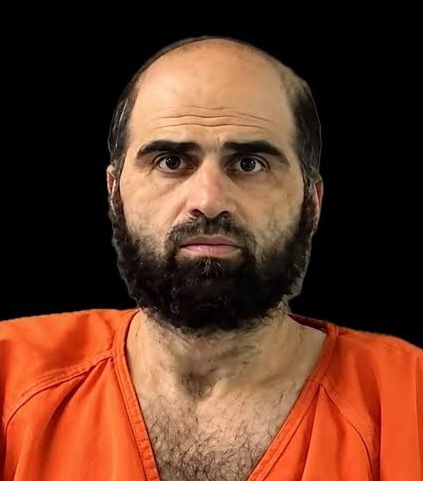
United States Army major Nidal Malik Hasan was convicted of 13 counts of premeditated murder and 32 counts of attempted premeditated murder under the Uniform Code of Military Justice (UCMJ). He was convicted by a military court-martial for the November 5, 2009, mass shooting at Fort Hood (now Fort Cavazos), Texas, where he killed 13 people and wounded more than 30 others. The execution is scheduled to take place on December 3, 2026, at 1:00 p.m. CST.
The United States Department of the Army is the governing body carrying out the execution, operating under the broader authority of the United States Department of Defense. The legal process for a military execution requires approval from the President of the United States. President Donald J. Trump approved the death sentence on October 2, 2026, and the execution is officially directed by the United States Army under Acting Secretary of the Army Adam Telle. The procedure itself is dictated by U.S. Army Regulation 190-55, which governs the logistics and rules of military executions
Location: It is set to be carried out at Fort Hood/Fort Cavazos, Texas, which is the exact military base where Hasan committed the 2009 mass shooting.
Method: Acting Secretary of the Army Adam Telle designated the method of execution to be a firing squad. If carried out, it will be the first U.S. military execution by firing squad since 1945.
Livestream Reversal: While the Pentagon initially announced that the execution would be publicly livestreamed, President Donald Trump subsequently canceled the livestream plans following widespread bipartisan backlash. The execution itself remains scheduled for December 3.
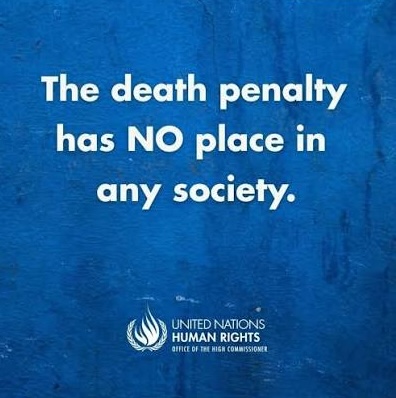
On a personal level, a Facebook friend posted a graphic produced by the United Nations that read:
“The death penalty has NO place in any civilized society.”
Due to the significant public exposure on this issue, this is an appropriate time to set the record straight regarding the biblical position on capital punishment.
Abstract
Contrary to what many might think, the Bible’s position on capital punishment is extremely clear; criminals convicted of crimes of an extreme nature, such as murder, are to be executed. Capital punishment is biblical; period. Furthermore, convicted criminals are to be executed publicly by the community as a demonstration of justice for the victim and the purging of evil from the community. But I also believe a biblical case can be made why executions should not be aired on television or live streamed on the internet. There is a distinction between “public” and “televised.”
The Primary Texts
Genesis 9:1–17; Deuteronomy 21:21–23; Romans 13:1–7.
A Covenant Obligation
After the Flood, when the waters receded, God made a covenant with all living creatures on the earth both human and animal. The mediator of this covenant was Noah and accordingly, in biblical and academic circles, this covenant is labeled the Noahic Covenant.1 It is recorded in Genesis 9.2
(8) Then God spoke to Noah and to his sons with him, saying: (9) “And as for Me, behold, I establish My covenant with you and with your descendants after you, (10) and with every living creature that {is} with you: the birds, the cattle, and every beast of the earth with you, of all that go out of the ark, every beast of the earth. [Genesis 9:8–10 NKJV]
It should be repeated for emphasis and clarity that this covenant was made with “every living creature”—it was not made with only Jews and/or Christians (neither of those distinctions existed yet; even Abraham didn’t exist yet) but with all of humans and all animals.
As part of this covenant, God reminded Noah that He made humanity in the “image of God” (v.6) and that it is for this explicit reason that the appropriate penalty for taking a human life, whether killed by an animal or a human, is death (v.5–6).
(5) Surely for your lifeblood I will demand {a reckoning}; from the hand of every beast I will require it, and from the hand of man. From the hand of every man’s brother I will require the life of man. (6) “Whoever sheds man’s blood,3 by man his blood shall be shed; for in the image of God He made man. [Genesis 9:5–6 NKJV]
Note that if an animal killed a human, it also was to be put to death because humanity was made by God in the image of God.
A plain reading of the text is very straightforward. According to God’s covenant with humanity, the death penalty is required for murder. Although distinctions between what modern jurisprudence labels “manslaughter” as compared to “first-degree” murder will become evident later in the biblical narrative, the foundational principle is that humanity was not given the discretion to adjudicate a different penalty in cases of first-degree murder. When a human life is taken, the life of the murderer is required.
Additionally, the application of the death penalty as a civil and moral requirement is reinforced by the fact that it is instituted as part of a divine covenant.
The function of a covenant is the amplification and reinforcement of intentions, and thereby obligations, of a contractual agreement between two parties.
The seriousness of the obligations is demonstrated by an inherent feature of covenant, symbolized by the sacrificial animal killed as part of the covenant ritual, that both parties agree that each will lay down their life before breaking the covenant. A party to a covenant would sooner die than not meet the obligations of the covenant.
The Noahic Covenant both blesses and obligates all humanity to its conditions. Exercising justice via the proper application of capital punishment is a covenant obligation placed on all humanity.
By the Mouth of Two Witnesses
In Paul’s letter to the Romans, the New Testament confirms capital punishment at the hands of civil authorities.
(3) For rulers are not a terror to good works, but to evil. Do you want to be unafraid of the authority? Do what is good, and you will have praise from the same. (4) For he is God’s minister to you for good. But if you do evil, be afraid; for he does not bear the sword in vain; for he is God’s minister, an avenger to {execute} wrath on him who practices evil. [Romans 13:3–4 NKJV, emphasis added]
Once again, a plain reading of the text is quite clear. Civil authorities do not “bear the sword,” (an idiom for capital punishment) in vain. “He” (civil authority) is an avenger to execute wrath on him who practices evil. Far from rejecting capital punishment, the Bible confirms its requirement in both Old and New Testaments. By the mouth of two witnesses.
Didn’t Jesus Overturn Capital Punishment?
Some will challenge this by asserting that Jesus overturned capital punishment just as he overrode other aspects of Old Covenant legislation.
But the simple rebuttal to this assertion is “no,” Jesus never overturned the covenant obligation of capital punishment. On the occasions when he did overturn Old Covenant legislation, he internalized the requirement, thereby setting the moral and ethical bar even higher. Likewise, on the occasions when he did overturn Old Testament legislation, such as the Sermon on Mount, he used a very clear verbal formula, “You have heard it said…but I say”; exercising his personal authority as Author and Fulfiller of (over) the law.
Frankly, there are several occasions in scripture where Jesus upholds Old Testament regulations but appears to alter them because we read into the text what we want to see instead of what is genuinely there.4 One such example is the woman caught in adultery (John 8). In this record, the Pharisees appear to be trying to turn Jesus’ own formula against him. They say…
- “Moses in the Law commands…” Essentially the equivalent of “You have heard it said…”
- “But what do you say…?” As if to say, “Okay Jesus, you think you’re some kind of authority, what do ‘you’ say?”
Thereby giving a shady appearance of being the same as his statements during the Sermon on the Mount.
But the simple fact is that this is a trap set by the Pharisees, not a legitimate question. Their intentions were to make Jesus appear “Damned if you do or damned if you don’t.”
If we read carefully, we realize that Jesus’ diffuses the situation by addressing the real question and not directly addressing the trick question (as if it were legitimate). The universal Noahic statute remains untouched.
By the way: The “real” issue, which is deserving of an article all its own,5 revolves around the phrase “cast the first stone”. The woman caught in adultery was not provided what we would call due process of the law. She was dragged before Jesus by the Pharisees who were trying to trick him into making a mistake they could use to accuse him and stone her. This was a kangaroo court, a lynch mob, and blood lust already at their tipping point; once the first stone was thrown, there would be no restraint, and no turning back. And where was the adulterer? The Mosaic Law requires both parties to be stoned.
The record of the woman caught in adultery is not a refutation of capital punishment (and cannot be) because the whole record is a farce of legitimate ethical and judicial process.
The Biblical Case for Public but Untelevised Execution
While the biblical case for capital punishment is quite clear, it is the opinion of this author that biblical standards require that any execution, while required to be public, should not be televised.
If the execution is televised (or “livestreamed”) it axiomatically will be recorded, and accordingly it will then be rebroadcast on the internet repeatedly until we are callous from watching it. I believe a record from Deuteronomy addresses this issue in principle.
(21) Then all the men of his city shall stone him to death with stones; so you shall put away the evil from among you, and all Israel shall hear and fear. (22) “If a man has committed a sin deserving of death, and he is put to death, and you hang him on a tree, (23) his body shall not remain overnight on the tree, but you shall surely bury him that day, so that you do not defile the land which the Lord your God is giving you as an inheritance; for he who is hanged {is} accursed of God. [Deuteronomy 21:21–23 NKJV]
This record, along with Genesis 9 and Romans 13, present a clear case for how and why capital punishment is a moral imperative, but also addresses additional issues.
“The men of the city.” Not women and children. Men. Heads of households. Communal civil authority. The community convicts. The community executes.6
“Stone him to death with stones.” The conventional method of that culture. Hands on. Again, communal civil authority. The community convicts. The community executes. Do not misunderstand, I am not claiming we need to return to stoning as our form of communal execution. I believe a reasonable case can be made that the method of execution can (and should) be a modern equivalent that fulfills the same function as the ancient Jewish method. In modern times, hanging or firing squads would be essential equivalents. It is this author’s opinion that lethal injection behind closed doors does not meet the biblical imperative.
“You shall put away evil from among you.” This is a critical component that has been missing from modern day jurisprudence for too long. Justice. Real, genuine justice. The guilty party is punished, and evil is purged from your community. Murder is evil. A person who commits murder is evil. And for too long, the Church has become passive about evil. Nowhere does the Bible exhort Christians to tolerate evil. Evil is to be identified, called out, and purged from our communities. Convicted criminals are to be executed publicly by the community as a demonstration of justice for the victims and purging evil from the community.
“All Israel shall hear and fear.” This is an explanation and amplification of the previous clause. Executions are supposed to be public so the local and extended community (“All Israel”), shall both hear about it and fear it. In other words, deterrence. If a community develops a reputation for justice for executing murderers, there is little question that the word will spread and crime will radically diminish.
“If a man has committed a sin deserving of death, and he is put to death, and you hang him on a tree.” This phrase could mean any method of execution involving a real tree or a cross, gallows, etc. The point is that the execution is public and the body put on display. But! This is where conditions start to change.
“But you shall surely bury him that day.” Although the ancient Hebrews had laws against touching dead bodies for ritual purity concerns (that doubled as sanitary requirements) the reason for this requirement is stated in the next clause.
“So that you do not defile the land.” Death on display is not something a community needs to see continuously. It affects people spiritually, emotionally, psychologically, and even physically. The ancient biblical prohibition recognized these legitimate concerns.
The ancient principle found in Deuteronomy 21:22–23 and the modern debate surrounding the livestreaming of Nidal Malik Hasan’s execution share a striking ethical core: both address the profound danger of turning an execution into an enduring public spectacle. Here is how the underlying logic of the biblical command translates directly into modern ethical, legal, and psychological concepts:
The Prevention of an Enduring Display
- The Biblical Context: Leaving a body hanging on a tree overnight prolonged the visibility of the punishment. It turned a completed act of justice into a continuous public exhibition.
- The Modern Equivalent: In the digital age, a livestream does not end when the broadcast stops. It is inevitably recorded, clipped, and uploaded to the internet, where it can be replayed indefinitely. Just as the ancient law sought to prevent a permanent physical display, modern digital ethics recognize that internet footage creates a permanent digital display that can never truly be buried.
Safeguarding the Community from “Defilement”
- The Biblical Context: The text warns that exposing the body would “defile the land” given to the community. The rot and shame of the criminal were seen as a spiritual and moral stain on the environment where innocent people lived.
- The Modern Equivalent: Broadcasting a violent execution into the public sphere is often viewed as a form of cultural or psychological defilement. Allowing an execution to become viral media content risks coarsening public discourse, desensitizing the public to violence, and traumatizing viewers. Canceling the livestream protects the digital and social “environment” from being polluted by graphic state-sanctioned violence.
Avoiding the Mythologizing or Glorification of the Criminal
- The Biblical Context: Swiftly burying the individual removed them from sight, ensuring they could not become a prolonged focus of public obsession, a monument of shame, or conversely, a rallying point for bad actors.
- The Modern Equivalent: Security experts and government officials frequently warn that broadcasting the execution of an extremist can turn them into a martyr for radical causes. Leaving the video accessible online allows extremist groups to weaponize the imagery for recruitment. A swift, untelevised but publicly witnessed execution ensures the state carries out justice without creating a permanent piece of propaganda.
Summary
Ultimately, both ideas agree that justice should have a definitive end point. The ancient law used a sunset deadline to prevent a physical spectacle; modern policy uses broadcast restrictions to prevent a digital one. In both eras, the goal is to punish the individual without allowing their crime or their death to permanently haunt and degrade the wider community.
Footnotes
- The Noahic Covenant is, in large portion, the foundational source of the Talmudic “Noahide Laws” currently prominent (and frequently being grossly misrepresented and misapplied) on social media.
- Genesis 9:1–17.
- “Shed man’s blood” = an idiom for murder.
- Exegesis versus eisegesis. Exegesis “draws out” from the text what is written. Eisegesis “puts into” the text what we want it to say.
- See the author’s series The Theory of Everything, Part 11. “The Opposite of Covenant”.
- This is significant concerning the case of Nidal Malik Hasan. He was an Army officer. He was apprehended, charged, tried, and convicted by the Army. He will be executed by the Army—all within the community directly affected.