
Caveat: I am publishing this article early to make it available sooner. All that’s missing are the footnotes. Stop back in a few days to get the full version.
Introduction
Last holiday season, I posted a review of the Netflix movie Mary on my YouTube channel. Having recently moved from state to state however, and not having unpacked my video gear just yet, this year’s review of Kevin Costner’s The First Christmas, may not make it to video, but rather be limited to a written review. If I find the time, I’ll make sure to let everyone know…
These moments are bittersweet for me. The God Save the King project is devoted to retelling the nativity story as biblically and historically accurate as possible in contrast to the stereotypical and almost trivialized traditional version of the nativity that is presented in churches and schools every holiday season. My decades of research have yielded mountains of breathtaking information about what the nativity really looked like. My website, YouTube channel, and social media are rife with examples of just how incredible a story this truly is—well beyond the oversimplified and all-too-often blatantly biblically incorrect traditional version.
So, I watch these movies and documentaries admittedly somewhat conflicted. I don’t want them to be incorrect; I want to see Jesus glorified by accurate presentations of his birth and life. But watch them I must.
The Netflix movie Mary was awful. I stopped taking notes when I reached 100 obvious mistakes. Costner’s The First Christmas is nowhere near as bad. As a matter of fact, it has a few, although very few, surprisingly accurate moments, but they are few and far between and all-too-often inseparably mixed with error a few seconds later. Unfortunately, at the end of the day, I cannot recommend it, the inaccuracies outweigh the accuracies about nine to one.
The First Christmas?
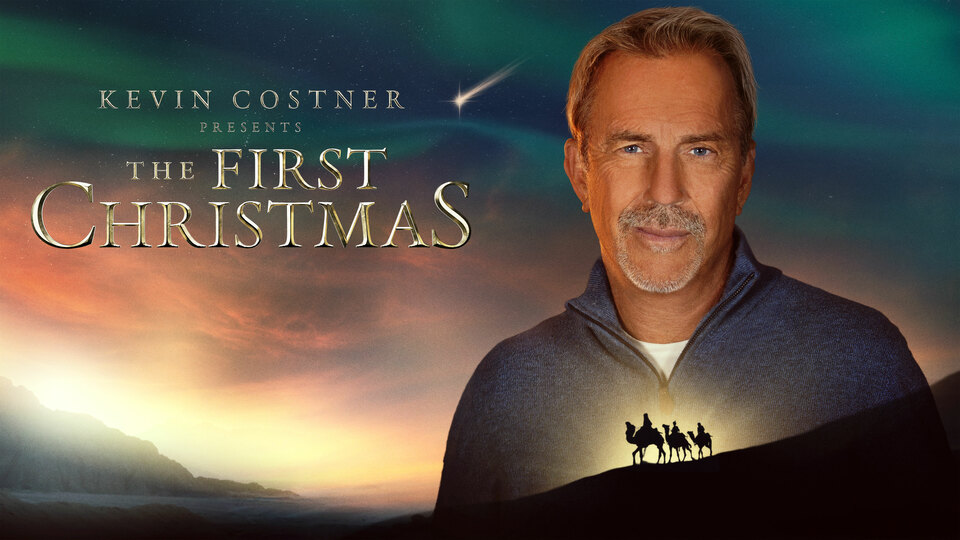
I should begin by mentioning that the title “First Christmas” is disingenuous. The word Christmas is an English word invented around 1000 years after Jesus walked the hills of Galilee and wilderness of Judea. It doesn’t have an etymological history reaching back to biblical times. The equivalent of the word “Christmas” simply did not exist in Hebrew, Greek, Aramaic, or even Latin at the time the Gospel writers were recording the infancy narratives. The word would have been unrecognizable to Matthew or Luke, Joseph and Mary, and for that matter, unrecognizable to even Jesus himself as part of his earthly ministry. There simply isn’t any biblical or historical connection between the word Christmas and the birth of Jesus of Nazareth. It is a later invention–it is Christian mythology.
Costner uses the phrase “First Christmas” repeatedly, acknowledging his connection between the nativity story and his Christmas experiences as a child.
I haven’t the time to thoroughly exposit all the mistakes and corrections—that’s the purpose of the whole God Save the King project. But the following is an abridged list of some of the errors along with some brief corrections.
Misses, Errors, and Contradictions
Mary is referred to as an “unwed teenager,” and the Hebrew concept of betrothal (Hebrew: erusin) and nuptials (Hebrew: nissuin) is entirely absent. Costner refers to Joseph and Mary as “engaged” and Joseph and Mary’s relationship is oversimplified to point of error. No deep research here.
Joseph is described as “a shamed lover”. (See my comments on whether Mary’s pregnancy was made public.) How could Joseph be “a shamed lover” if Mary’s pregnancy was never public? While I understand the intent–the reality was different.
Joseph and Mary’s journey to Bethlehem is described as “treacherous”, which is not only incorrect, but conveniently ignored regarding Mary’s previous trip to Judea to visit Elizabeth.
Mary’s delivery is called “a harrowing birth”, but then later, the obviously Roman Catholic expert suggests that the “Blessed Mother’s” delivery may have had no pain. While “a harrowing birth” and a painless delivery may may not refer to precisely the same thing, there is enough overlap to cause confusion. Which is it? Which of these is “what really happened”? Costner makes several references to his documentary being “the real story”. If so, it is fair to scrutinize it and hold it to a high standard.
Mary’s father is called Joachim. This is tradition not biblical or historical fact. Mary’s father’s name was more likely either also “Joseph,” or unknown entirely. The likelihood that his name was Joachim is extremely low.
Joseph and Mary’s “engagement” is portrayed as a very public celebration when Hebrew betrothals were usually quite private and more procedural than celebratory.
We are told that Joseph was being tested to see if he could provide for Mary while they were engaged. This is a wholly incorrect portrayal of how Hebrew betrothals worked. Joseph would not have had to provide for Mary at all, yet; while betrothed, she would have remained in her father’s house and been provided for by him until the nuptials.
Joseph and Mary discuss the details of the wedding ceremony. Again, this misses genuine Hebrew practices by a mile. This is a culture that practiced arranged marriages. Joseph and Mary’s fathers would have arranged the betrothal, which (again) was more legality and procedure than celebration. During the betrothal period, Joseph would have prepared the wedding chamber (Hebrew: chuppah) until his father revealed the day of the nuptials to him. Meanwhile, Mary had to be prepared because Joseph could show up at any time because she didn’t know the timing in advance either.
Dowry (Hebrew: shiluhim) and bride price (Hebrew: mohar) are confused. They are not the same thing, and do not match modern Western definitions. Furthermore, the “bride price” was exorbitant and made it seem like Mary was being auctioned to the highest bidder.
It is highly unlikely there were Roman soldiers in Nazareth at that time. Roman legions were not yet garrisoned in Judea, so what few numbers there may have been, would have been specialized assignments connected to Herod’s rule, meaning almost exclusively in Caesarea Maritima and Jerusalem. Possible? Maybe, but really a stretch.
Even the expert’s evidence regarding Roman taxation and census taking is oversimplified to the point of error.
We are told that Samaritans were used as “local law enforcement”. In forty years of research on this subject, I have never heard such a thing. Show me the evidence or shut your mouth.
We are told “Herod was ‘tolerated’ by the Romans”. Again, vastly oversimplified to the point of error. Augustus didn’t like Herod much, it is true, but Herod was the perfect man with the perfect skill set to be Rome’s client king—that’s why Marcus Antonius and Octavian (Augustus) had him appointed in the first place.
We are told that no foreign nation had hegemony over Judea as long as Rome. Really?
- Babylon overruled Judea from ~605 BCE until ~539 BCE—approximately 66 years.
- Persia overruled Judea from ~539 BCE until ~330 BCE—approximately 210 years!
- Greece overruled Judea from ~330 BCE until ~140 BCE—approximately 190 years!
Rome began its hegemony over Judea in 63 BCE; Jesus was born is 3 BCE. Do the math!
Herod’s son Antipater is portrayed as about 20 years old and is murdered by Herod himself. In reality, Antipater was close to 50 and Herod was near 70 when Herod ordered his execution. Herod was invalid at this point. If Herod and Antipater would have fought, Antipater would have easily won. If Antipater had the opportunity to fight his father, he would have used it to kill him.
Herod’s sister Salome is portrayed far too young.
There is a woman in the scene where Herod murders Antipater (which he didn’t—he ordered his guards to murder him in his prison cell). This woman is apparently supposed to be Herod’s first wife and Antipater’s mother Doris—who at that time would have been a woman in her mid to late sixties! (Portrayed far too young.)
One of the experts says, “Mary doesn’t come from an important family”. Again. Really? She was of the tribe of Judah and the house of David. Nazareth was the “town of the Branch”—a village populated exclusively by members of the house of David with an eye towards the bloodline of the Messiah. While Nazareth was a small agricultural village, Joseph was a tekton—a builder—which means decent money. Rich? No. But the house of David was the most important clan in all Israel.
There is no real understanding of how Roman taxation/census taking worked. Too much emphasis on the money. There had not been regular census taking (a Roman religious function as well as fiscal one) for nearly 100 years, which is why this was an extraordinarily unique registration.
Mary is portrayed as explicitly leaving Joseph to travel to Judea to visit Elizabeth. It is very possible that Mary left Nazareth for Judea without even telling Joseph so she wouldn’t have to explain why she was going. Or she would have limited her explanation to “helping Elizabeth” but said little else.
As is often the case in traditional versions of the story, Mary’s pregnancy is made public. This is despite the fact that there is no biblical evidence to this effect. Regardless of how few people are portrayed as knowing, once it was public, there would have been no stopping the gossip from spreading–that’s simple human nature. This is a grossly misunderstood part of the story. Secrecy would have been paramount and given the fact that the Bible itself does not say that she was publicly discovered it is far more probable that the “discovery” the Bible mentions was limited to Joseph alone.
We are told Joseph and Mary traveled to Bethlehem “months” after the wedding. In contrast, the need to travel to Bethlehem would have been the perfect cover story to get approximately three-months-pregnant Mary out of Nazareth before she was discovered.
We are told they were “privately wed”—not a “large Jewish wedding”. Again, they get it backwards. The betrothal ceremony was usually quite private—the nuptials were the public celebration. Joseph and Mary (whose pregnancy was not public knowledge) would have gone through with the nuptials to both save face, and because it fulfilled necessary legal requirements.
We are told that “Romans” patrolled the roads, and often “committed random acts of violence”. While this is possible, it is unlikely. Again, Roman legions did not garrison Judea at this time, and news of “random acts of violence” would have eventually made their way back to Herod who would have complained to Augustus. Although violence from the Romans could and did happen, there were times when they got away with it and times when they didn’t. Use of violence, although not uncommon, was more-often-than-not calculated not spontaneous. Unnecessary provocation of local indigenous personnel was frowned upon by the Romans themselves and especially by Herod.
We are told that Bethlehem was overwhelmed with visitors due to the taxation. Nope. If Bethlehem was overwhelmed, which isn’t likely, it would have been due to the fall festivals, during which time Jesus was really born. It is both an historical and biblical misinterpretation to suggest that everyone was required to go to their ancestral hometown to register–only landowners would have been required to do this. No tenants would have been required to travel to their ancestral hometown.
We are told that Jesus was born in a cave. This is pure tradition with no legitimate biblical or historical evidence to support it.
We are told that the Magi saw “the birth of a new star”. What a load of hooey. No grasp of ancient Near Eastern archaeo-astronomy whatsoever.
We are told that the angels “sang”—while possible, there is no biblical evidence to support this.
The Magi are defined as Zoroastrian priests—a “religious sect of astrologers”. This characterization is not entirely incorrect but also falls far short of any real explanation of who the Magi truly were. No in-depth historical research here. Move along.
We are told whatever they saw in the heavens “stunned” them. A curious word to use. There was no attempt whatsoever to explain what the Magi saw, it was simply characterized as “a new star” which is a highly unlikely explanation of what they saw. Mesopotamia (Babylon) had a 3000-year history of elite level celestial observation by this time. The Parthian Zoroastrians also utilized astronomy, but it was the Babylonians who were the true experts. The word “Magi” has been applied historically to both Babylonian and Zoroastrian astronomers—which, or both, are being referred to by Matthew? The experts, or the semi-pros?
The lead Magus paints his face for some undisclosed reason.
We are told that the Magi “have no Jewish roots”. While this is technically correct, because astronomy permeated all Near Eastern cultures, it is probable that celestial observers of several ethnicities and faiths living in Babylon cooperated by sharing their observations and records.
We are told that the Magi’s journey was over “treacherous terrain” and lasted “months” when in reality it would have been over well-established trade routes (roads) and took about six weeks.
Herod’s “favorite wife” Mariamne is portrayed as being alive at the time of Jesus birth—she had been dead (executed at Herod’s order) for 25 years.
Herod’s “Jewish” faith is mischaracterized. While Herod’s Jewish faith may have been somewhat disingenuous, he nonetheless usually (but not always) went to great lengths to not unnecessarily provoke his Jewish subjects. He was not utterly antagonistic to the Jewish faith as is portrayed in the documentary.
Herod is portrayed as moderately old but vigorous at the time of Jesus birth, when he was actually very old by contemporary standards and essentially invalid—being carried about on a litter.
A subtitle describes the language the Magi spoke as “a global language”. How woke! The Parthian’s native tongue would have been a form of proto-Iranian, but the languages spoken by the Magi would have included Aramaic and Greek which were lingua franca of the region at the time. Plus, royal courts (which they were part of) traveled with interpreters. The official language of Herod’s court was Greek.
Joseph and Mary ride horses when they fled to Egypt. Possible? Maybe, but a pretty-huge “maybe”.

Herod is portrayed as having stabbed himself in the abdomen with a large knife. Near the end of his life, he tried to stab himself with a paring knife at his palace in Jericho but was stopped by a bodyguard.
Herod had a second wife named Mariamne (II) who would have been alive about this time, and was implicated in conspiring against Herod, but Herod’s “favorite wife” was Mariamne (I) the Hasmonean who he had executed in 29 BCE. While confusing the two Mariamnes is somewhat understandable, it is inexcusable in a documentary claiming to “tell the real story”.
A Few Bright Moments
There were a few bright moments in the show, but too few and far between for me to recommend watching it.
We are told that it was highly likely that Joseph and Mary knew each other since they were children raised in Nazareth. Joseph is not, contrary to some traditions, portrayed as an older, previously married (widowed) man with other children. (Praise God!)
The notion that Mary rode a donkey is rightfully challenged. The fact that she and Joseph more likely traveled in a group and either walked or rode in a cart are portrayed/mentioned.
The fact that Bethlehem was so small a village that the likelihood of a traveler’s inn was extremely thin was mentioned, as was the ancient Near Eastern custom of hospitality. The likelihood is very high (almost certain) that Joseph owned land in Bethlehem himself, or was part of a family that owned land, and Joseph anticipated staying with them.
The high likelihood of a midwife (or midwives) was mentioned.
The Parthian Empire is mentioned. No detail given whatsoever but mentioned.
How Simeon is portrayed (in the Temple) is pretty accurate and well done cinematically. One of the better moments in the show.
The Magi characterize Herod as the “provisional king of the Jews”. Nice touch. But the Magi were also characterized as somewhat naïve when there was serious political intrigue in their realm as well. Plus, there were international relations and large Jewish communities in Parthia. The Magi were not some “mysterious cult” to the Jews, that’s why Matthew doesn’t bother explaining who they are, he just writes, “Wise men (Greek: magoi) came from the east…” presuming his audience knew who he was writing about.
My favorite: When the Magi present their gifts, they burned incense. While this is not explicitly mentioned in scripture, “gold, frankincense, and myrrh” suggests a connection to the incense offering in the Temple, thereby acknowledging Jesus’ deity. The likelihood that the Magi burned incense “as an offering (gift)” is high in addition to probably giving the family quantities of gold, frankincense, and myrrh.
Conclusion
So, there you have it ladies and gentlemen. In my opinion, if you are concerned about understanding what really happened at the nativity, despite what Kevin Costner suggests, don’t watch his documentary. It’s an hour of valuable time you can’t get back.